
A Trio of 3D Chandra Models Launch on Voyager
For over a decade, NASA's Chandra X-ray Observatory has been releasing three-dimensional models (3D) that transform astronomical data into interactive experiences. These science-based visualizations offered new ways to explore stellar evolution, supernova remnants, and the complex structures revealed through X-ray observations.

Now, three of those models are taking the next step.
Beginning in late June, the 3D models of the Cygnus Loop, BP Tau and G292.0+1.8 will be available on the Smithsonian Institution's Voyager platform, providing a rich, immersive way to investigate these remarkable cosmic objects.
A New Way to Explore the Universe
Voyager is an interactive platform developed by the Smithsonian that allows users to freely interact with 3D datasets in a web browser. Visitors can rotate, zoom, and examine objects from any perspective while exploring guided tours that highlight important structures and scientific discoveries. The platform also supports augmented reality experiences and downloadable 3D-printable files.
For these three Chandra objects, Voyager adds new layers of exploration beyond a traditional 3D model viewer. Users can tumble around the remnants in three-dimensional space, investigate specific features through annotated stops, and gain a deeper understanding of the processes that shaped these cosmic structures. Voyager experiences developed by the Chandra team also incorporate visual descriptions, sonifications (translations of data into sound), voiceovers, and more. All of these features help more people access this astronomical data in meaningful ways.
Cygnus Loop
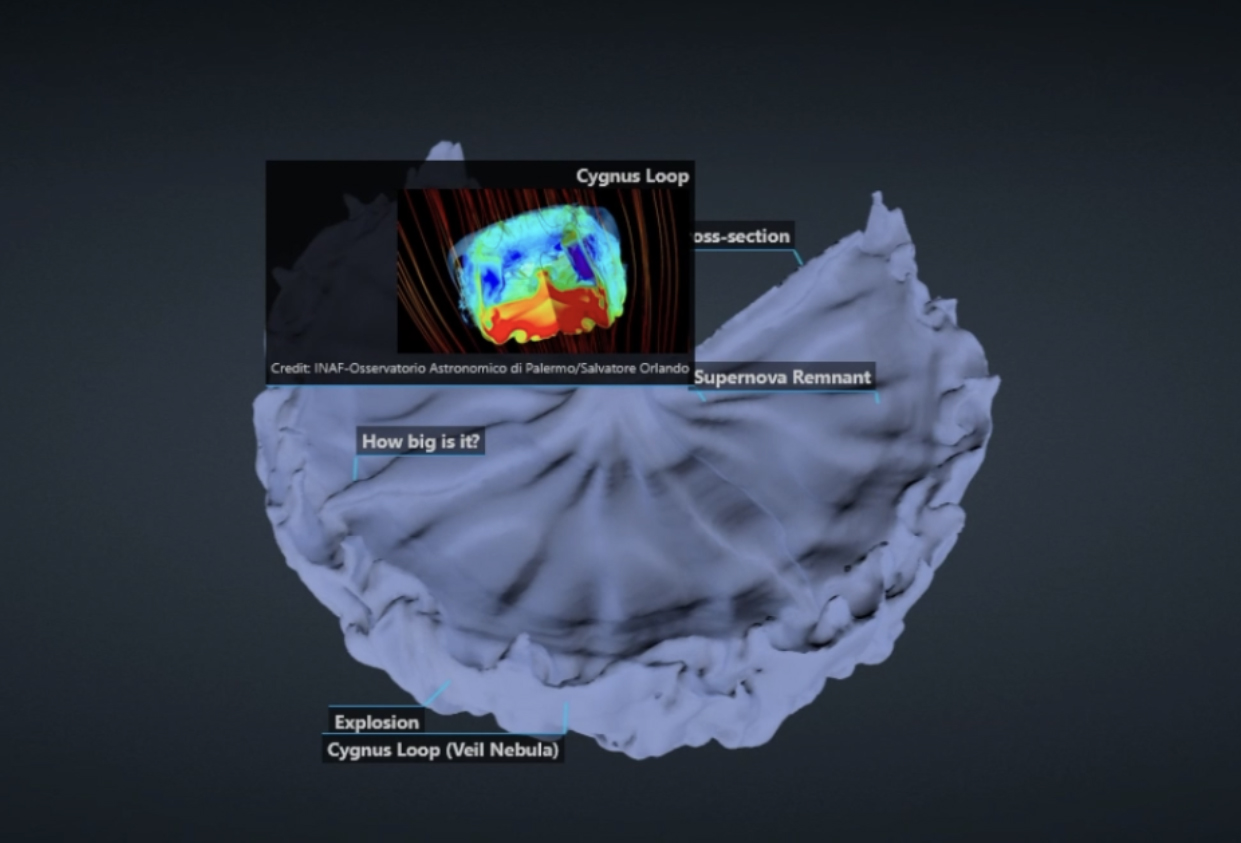
The Cygnus Loop, also known as the Veil Nebula, is a vast supernova remnant located approximately 2,600 light-years away from Earth in the constellation Cygnus. Spanning about 120 light-years across, the Cygnus Look is the result of a massive star that exploded between 5,000 and 10,000 years ago. Exploring the model in 3D helps reveal the complex shell-like structures created as the blast wave interacts with surrounding material.
G292

Supernova remnants are the debris from exploded stars. G292.0+1.8 is a rare type of supernova remnant that contains large amounts of oxygen. Located in our Milky Way galaxy (about 20,000 light-years away in the constellation Centaurus), G292.0+1.8 was created when a massive star ran out of fuel, collapsed under its own gravity. The 3D model of G292.0+1.8 allows visitors to investigate the remnant's unusual shape and the distribution of elements forged inside the star before it exploded.
BP Tau
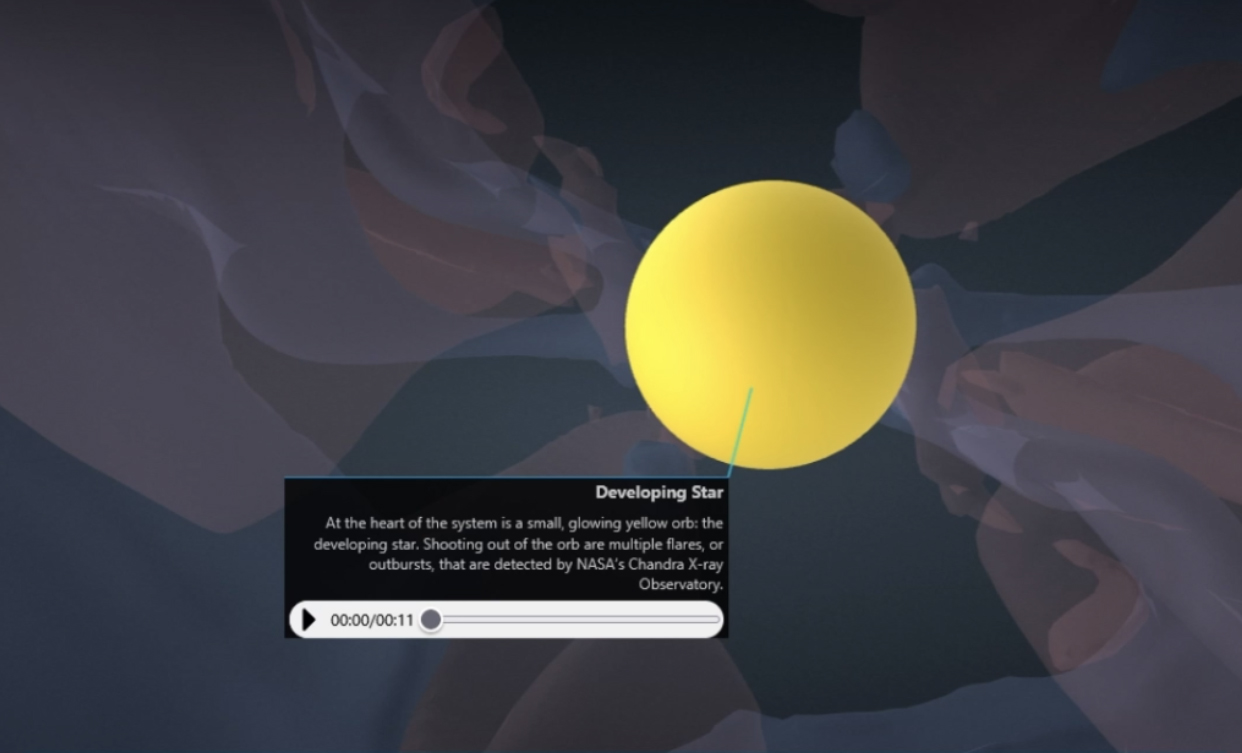
BP Tau belongs to a class of very young, still-forming stars that are less than 10 million years old called “T Tauri” stars. These stars were called this because the first one astronomers discovered was in a cloud of dust and gas called the Taurus Molecular Cloud, which is located about 420 light-years from Earth. BP Tau is also found there. BP Tau offers users a way to explore the early stages of stellar and planetary evolution and how material accretes onto a young star from its surrounding environment.
Explore for Yourself
Bringing these objects into an interactive 3D space helps expand the ways people can engage with astronomical data. Whether you're interested in the science, the visualizations, or simply exploring the universe from a new perspective, these interactive Chandra 3D models are a great opportunity to experience data from space differently.
-April Jubett & Megan Watzke, CXC